
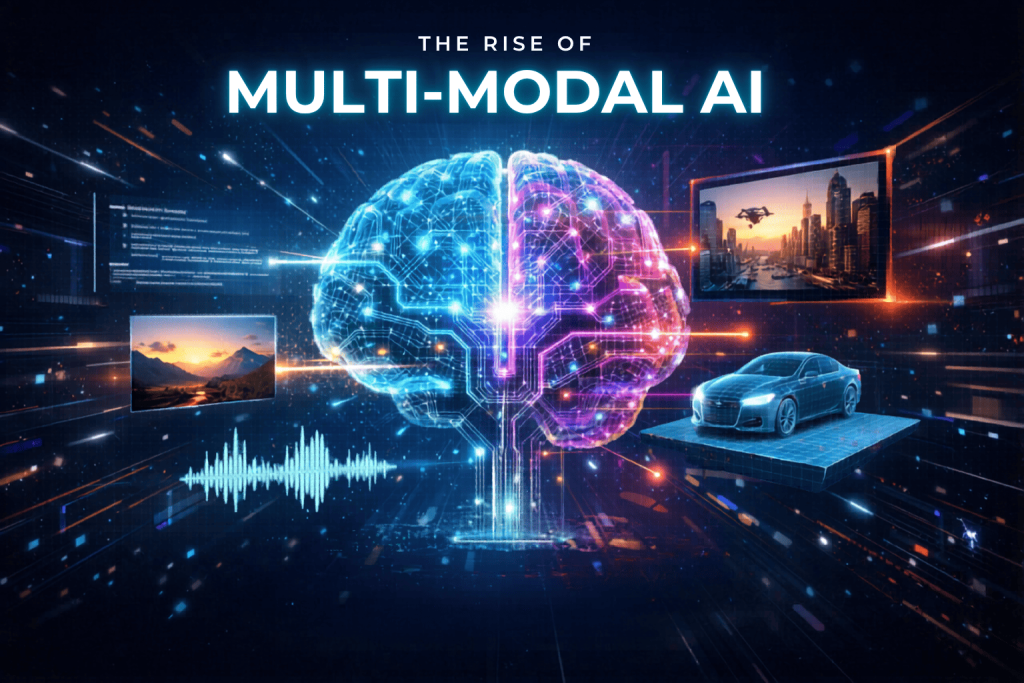
Artificial intelligence is entering a new era. Today, machines are no longer limited to understanding a single type of data such as text or images. Instead, modern AI systems can process multiple forms of information simultaneously, including text, images, audio, video, and even 3D spatial data. As a result, this evolution, known as multi-modal AI, is powering some of the most exciting breakthroughs in technology, including generative video.
Generative video technology enables AI systems to create realistic video content from simple prompts, images, or structured data inputs. Previously, this process required full production teams, professional equipment, and extensive editing. Now, however, intelligent algorithms can generate high-quality video content with significantly reduced effort and cost.
At the core of these advancements, there is one critical foundation: high-quality training data. In order to understand and generate complex multimodal content, AI models require precisely labeled datasets. Therefore, professional data labeling services play a vital role in building reliable and scalable AI systems.
Understanding Multi-Modal AI
Traditional AI models typically work with one type of data at a time. For example, natural language processing models focus on text, while computer vision models analyze images or videos. However, despite their capabilities, these systems remain limited because real-world information rarely exists in isolation.
To overcome this limitation, multi-modal AI allows machines to process and combine different types of data simultaneously. Instead of analyzing inputs separately, these systems integrate text, visuals, and audio to develop deeper contextual understanding.
For example, imagine an AI assistant that receives a voice command asking about a product while also analyzing an image of that product. A multi-modal AI system can combine the spoken request with the visual information and deliver a more accurate response.
Similarly, autonomous vehicles rely on multi-modal AI to interpret the world around them. Cameras capture visual data, LiDAR sensors generate 3D spatial information, radar detects moving objects, and GPS provides location data. By combining all these inputs, the vehicle can safely navigate complex environments.
Training such systems requires large datasets that combine images, videos, and spatial information, often supported by specialized 3D point cloud data labeling services.
What is Generative Video?
Generative video is one of the most exciting applications of artificial intelligence. It refers to AI systems that can automatically create video content using machine learning models.
Instead of recording footage manually, users can generate videos through simple prompts. For example, a user might provide a text instruction describing a scene, and the AI generates a video that visually represents the description.
These systems are trained on massive datasets containing millions of images and video frames. By learning patterns related to motion, lighting, objects, and scene composition, AI models can create entirely new video sequences that look realistic and visually coherent.
To build these systems effectively, companies often rely on large-scale video annotation services that help AI understand motion, object interactions, and scene transitions.
Why Multi-Modal AI is Important for Generative Video
Generative video models depend heavily on multi-modal capabilities. To generate realistic content, the AI must interpret multiple forms of data and convert them into visual sequences.
For example, imagine an AI assistant receiving a voice command while analyzing an image of a product. In this case, a multi-modal system combines both inputs to deliver a more accurate response.
Likewise, autonomous vehicles rely on multi-modal AI to interpret their surroundings. Cameras capture visuals, LiDAR generates spatial data, radar detects motion, and GPS provides location context. By combining these inputs, the system can navigate complex environments safely. The AI must align all these inputs to produce a coherent video output.
Training these systems often involves datasets created through image annotation services and audio annotation services.
Applications of Generative Video Across Industries
Generative video is transforming how organizations create and distribute visual content. Businesses across industries are exploring how AI-generated video can improve efficiency and enhance creativity.
Some of the key industry applications include:
• Film and Media Production
Support creative workflows by generating scene previews, storyboards, and visual effect concepts before production begins.
• Marketing and Advertising
Create highly personalized promotional videos for different audience segments while reducing production time and cost.
• Gaming and Virtual Worlds
Build immersive experiences through dynamic environments, cinematic sequences, and interactive storytelling.
• Education and Training
Enhance learning with AI-powered simulations, engaging instructional content, and immersive training environments.
• E-commerce and Product Visualization
Showcase products effectively using AI-generated demos and promotional visuals without the need for traditional video shoots.
Why Data Labeling is Essential for Multi-Modal AI
Behind every powerful AI model lies massive volumes of training data. For AI systems to understand patterns accurately, this data must be carefully annotated.
Data labeling helps AI systems recognize objects, actions, speech patterns, and contextual relationships between different data types. Without accurate labeling, AI models struggle to learn meaningful insights.
For multi-modal AI, annotation becomes even more complex because different data formats must align correctly.
Examples of common annotation types include:
• Image Annotation
Deliver precise labeling using bounding boxes, segmentation, polygon annotation, and keypoint detection, handled by expert image data specialists.
• Video Annotation
Enable accurate insights with frame-by-frame object tracking, activity recognition, and motion labeling powered by advanced video annotation solutions.
• Audio Annotation
Transform audio data into intelligence through speech transcription, emotion detection, and speaker identification.
• Text Annotation
Unlock meaning from text with sentiment analysis, entity recognition, and intent classification using NLP-driven annotation.
• 3D Data Annotation
Leverage LiDAR and point cloud technologies for accurate spatial object recognition and high-quality 3D data labeling.
Accurate labeling across these modalities allows AI systems to understand relationships between text, visuals, and audio inputs.
How Infolks Supports Multi-Modal AI Development
Infolks is a leading provider of AI training data and data annotation services that help organizations build powerful machine learning models.
With extensive expertise in multi-modal annotation, Infolks supports companies working on advanced AI applications across industries such as healthcare, automotive, retail, agriculture, logistics, and security.
The company offers comprehensive data annotation services, including:
• Image Annotation for computer vision training datasets
• Video Annotation for motion analysis and object tracking
• Audio Annotation for speech recognition and voice AI
• Text Annotation for natural language processing models
• 3D Point Cloud Annotation for autonomous systems
These services help organizations build high-quality training datasets required for developing reliable AI models.
Infolks also uses its advanced in-house annotation platform LabelMore, which supports multiple annotation formats and improves labeling efficiency.
Why Businesses Choose Infolks
Organizations developing AI systems partner with Infolks because of its strong focus on data quality, security, and scalability.
Key advantages include:
• Triple-layer quality assurance to ensure high annotation accuracy
• ISO 9001 and ISO 27001 certifications ensure quality and security standards
• GDPR and HIPAA compliance for secure data handling
• Experienced annotation teams capable of handling large datasets
• Flexible and scalable project management for AI development needs
These capabilities allow businesses to build more reliable AI models while maintaining strict data security standards.
The Future of Multi-Modal AI and Generative Video
The next wave of AI innovation will be driven by the combination of multi-modal intelligence and generative technologies. As AI models continue to evolve, they will become capable of producing increasingly realistic and interactive digital content.
Future developments may include fully AI-generated films, automated marketing campaigns, interactive virtual worlds, and personalized video experiences for individual users.
However, even as these innovations evolve, they continue to rely on one fundamental component: high-quality labeled training data.
Accelerate Your AI Development with Infolks
If your organization is building multi-modal AI systems, generative video platforms, or advanced machine learning models, then access to high-quality labeled data becomes essential. Without it, even the most advanced technologies struggle to deliver accurate results. That’s why investing in reliable data annotation is critical for ensuring performance, scalability, and real-world impact.
Infolks provides scalable and secure data labeling services designed to support next-generation AI technologies.
From image annotation and video labeling to NLP datasets and 3D point cloud annotation, the Infolks team ensures that your AI models are trained with accurate and reliable datasets.
Ready to improve your AI model accuracy?
Visit www.infolks.info to explore our AI data annotation solutions or request a free demo to see how expert data labeling can accelerate your AI innovation.